Information about new publications, applications, software releases, training activities, and projects.
04.08.2026
Henrik Johansson Rehn, Alexandre Sukhov, Lars E. Olsson, and Margareta Friman use CNA to explore the “window of opportunity” for car use reduction and to identify the causal pathways that lead people to reduce their car use.
03.08.2026
Daniel C. Semenza, Edward J. Miech, Brielle Savage, and Devon Ziminski use CNA to examine how combinations of city-level prevention efforts and state-level firearm policies link to fatal shooting rates across 100 US cities.
19.06.2026
Laura Caci, Kathrin Blum, Lauren Clack, and Bianca Albers provide guidance on selecting factors for Coincidence Analysis and other configurational comparative methods, offering a four-stage approach for implementation researchers.
17.04.2026
John Rich, Edward Miech, and colleagues apply CNA to identify the social factors that link to low life expectancy across Chicago’s 77 community areas, finding that low birth weight, unemployment, and non-fatal shootings combine across alternative pathways to the outcome.
03.11.2025
Abdu A. Adamu and colleagues introduced CNA as a tool to improve immunization decision-making and address disparities in vaccination coverage, arguing that CNA can help immunization stakeholders better understand impleme
03.11.2025
Jesse Rhodes delivers an exemplary study applying Coincidence Analysis (CNA) to discover causal paths leading to substantial improvement in subnational democracy in the U.S. states.
07.08.2025
In July 2025, the PATANG team at The George Institute for Global Health (TGI) organized two CNA training workshops in Asia: one in Bali, Indonesia, in collaboration with the International Health Economics Association (IH
22.04.2025
Reiping Huang and colleagues applied CNA in the field of surgery and published their results in the world’s most highly referenced surgery journal: Annals of Surgery. Their study explains the successful implementation of
06.04.2025
Christoph Falk, Mathias Ambühl, and Michael Baumgartner released a new R package called causalHyperGraph on CRAN. It draws causal Hypergraphs from solution formulas of the CNA method.
06.04.2025
Mathias Ambühl and Michael Baumgartner released version 4.0.0 of the cna R package on CRAN. Many new measures for sufficiency and necessity evaluation are now available for CNA model building.
07.03.2025
Emmeline Chuang and colleagues applied CNA in a mixed methods analysis to identify the conditions under which collaboration strategies affect implementations of cross-systems interventions for child welfare and substance
07.03.2025
Mandi L. Pratt-Chapman and colleagues applied CNA to identify key difference-makers distinguishing oncology institutions that collect sexual orientation and gender identity (SOGI) data across a sample of American Society
05.12.2024
On October 10 and 11, 2024, Dr. Jonathan Freitas (UFMG/Brazil) conducted an introductory CNA course at the Clinical Hospital of the School of Medicine at the University of São Paulo (HC/FMUSP). The course brought togethe
28.11.2024
Jordan Becker, Paul Poast, and Tim Haesebrouck combined CNA with Regression Analysis in a mixed method approach to investigate why countries with disparate geography and perceptions of the international security environm
17.08.2024
Michael Baumgartner and Christoph Falk published a paper entitled “Quantifying the quality of configurational causal models” in the Journal of Causal Inference. The paper introduces quantitative quality criteria for caus
17.08.2024
Deborah Cragun, Zachary M. Salvati, Jennifer L. Schneider, et al. use CNA to identify factors and causal chains associated with optimal implementation of Lynch syndrome tumor screening.
12.06.2024
Version 3.6.2 of the cna R package was released on CRAN, accompanied by a minor adjustment of the frscore package. Both updates should be installed.
31.05.2024
Marta Roczniewska, Ole Henning Sørensen, Susanne Tafvelin et al. use CNA to invesitigate the causes of how employees perceive the relevance of health interventions at the workplace.
31.05.2024
Chava Pollak, Joe Verghese, Helena M Blumen use CNA to identify combinations of social factors that make a difference for frailty among older adults.
15.01.2024
Luna De Souter identifies shortcomings of the two main measures for evaluating CNA models, consistency and coverage, and introduces two new evaluation measures.
25.08.2023
Mathias Ambühl and Michael Baumgartner released a new update of the cna R package on CRAN. The latest version is 3.5.4.
25.08.2023
Dean, M, Tezak, A, Johnson, S, … Cragun, D. used CNA to identify factors differentiating cancer risk management decisions among females with pathogenic/likely pathogenic variants in PALB2, CHEK2, and ATM. Accompanied b
22.06.2023
Jessica Dodge et al. (2023) conducted a Coincidence Analysis investigating various factors influencing timely implementation of research findings into clinical practice in the Veterans Health Administration (VHA).
22.05.2023
Laura J Damschroder et al. (2022) conducted a Coincidence Analysis of obesity treatment options within the Veterans Health Administration, which was selected “Editor’s Choice” by Translational Behavioral Medicine.
03.05.2023
A new version of the frscore extension package for cna is now available on CRAN.
10.04.2023
Tim Haesebrouck applied the frscore routine in an exemplary manner to examine the conditions under which populist radical right parties support military deployment decisions in national parliaments: Haesebrouck T. (2023)
29.09.2022
John Rich, Edward Miech, Daniel Semenza and Theodore Corbin applied CNA in a new study investigating the effect of 10 firearm laws in US states on homocide and suicide rates.
19.09.2022
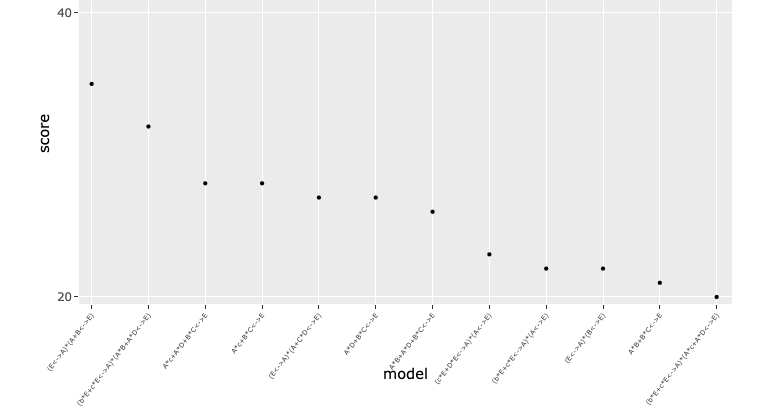
In a series of news articles, Veli-Pekka Parkkinen informs about new developments concerning the frscore package for CNA robustness analysis. To make the best of frscore, users are encouraged to follow these updates.
07.09.2022
The data analysis method of Coincidence Analysis has been introduced to the field of medical informatics: Womack DM, Miech EJ, Fox NJ, Silvey LC, Somerville AM, Eldredge DH, Steege LM. (2022), Coincidence Analysis: A Nov
30.08.2022
Martyna Swiatczak is visiting the University of Frankfurt for three months.
07.06.2022
Veli-Pekka Parkkinen argues that variable relativity is good, in a paper that recently appeared in Synthese: Parkkinen, VP. Variable relativity of causation is good. Synthese 200, 194 (2022). https://doi.org/10.1007/s112
24.01.2022
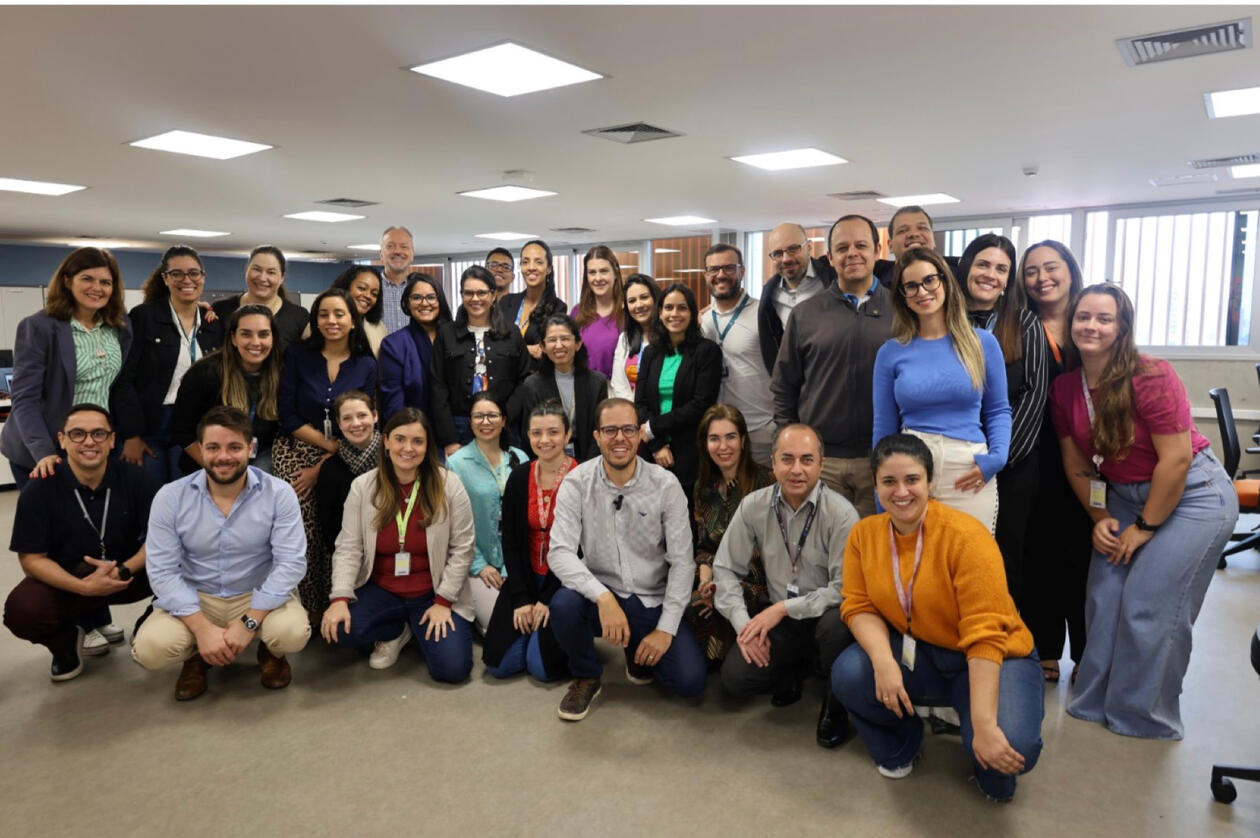
The CNA group has the pleasure to welcome Luna de Souter to the team.
01.10.2021
Martyna Swiatczak’s paper entitled “Towards a neo-configurational theory of intrinsic motivation” was published in Motivation and Emotion (2021): https://doi.org/10.1007/s11031-021-09906-1
01.10.2021
Michael Baumgartner and Christoph Falk published a paper entitled “Configurational Causal Modeling and Logic Regression” in Multivariate Behavioral Research (2021): https://doi.org/10.1080/00273171.2021.1971510
20.08.2021
New CNA software published on The Comprehensive R Archive Network.
16.08.2021
Martyna Swiatczak’s paper on “Different algorithms, different models” was published in Quality & Quantity (2021): https://doi.org/10.1007/s11135-021-01193-9
24.06.2021
The CNA group is very happy to announce that the Research Council of Norway (Forskningsrådet) will fund the further development of CNA with NOK 12,000,000 (about 1,2 M EUR) over the coming years.
23.06.2021
Michael Baumgartner’s paper on “Qualitative Comparative Analysis and robust sufficiency” was published in Quality & Quantity (2021): https://doi.org/10.1007/s11135-021-01157-z
03.06.2021
A procedure for optimizing the fit of configurational causal models has been introduced in a new paper published in Sociological Methods & Research.
03.06.2021
New procedure estimating the robustness of configurational causal models introduced in a paper in Sociological Methods & Research
03.06.2021
L. Casini and M. Baumgartner (2021), The PC Algorithm and the Inference to Constitution, The British Journal for the Philosophy of Science. doi: 10.1086/714820. Online supplementary material; [penultimate draft]
11.03.2021
Christoph Falk (PhD 2020, Geneva) has joined the CNA project as a part-time researcher.
14.12.2020
The CNA method has been showcased in the flagship journal of implementation science.
27.10.2020
CNA has been applied in a study on factors influencing the implementation of a colorectal cancer screening improvement program in community health centers.
09.08.2020
The CNA method was applied in a study about the patient safety culture in medical homes.
24.05.2020
Susan Hickman et al. (2020) published an article entitled “Identifying the Implementation Conditions Associated With Positive Outcomes in a Successful Nursing Facility Demonstration Project” in the Gerontologist. They an
11.04.2020
The official journal of the medical care section of the American Public Health Association just published an application of the CNA method, among other configurational comparative methods, to the effectiveness of the imp
25.02.2020
Michael Baumgartner published an article introducing the main theories of causation to political scientists in the SAGE Handbook of Political Science.
22.01.2020
From September 21 to 25, 2020, Michael Baumgartner and Alrik Thiem (University of Lucerne) will hold a training seminar on configurational causal modeling with a heavy focus on CNA at the Regenstrief Institute for public
22.10.2019
Michael Baumgartner and Christoph Falk, Boolean Difference-Making: A Modern Regularity Theory of Causation, The British Journal for the Philosophy of Science
22.10.2019
New CNA software published on the The Comprehensive R Archive Network.